
Financing International Training
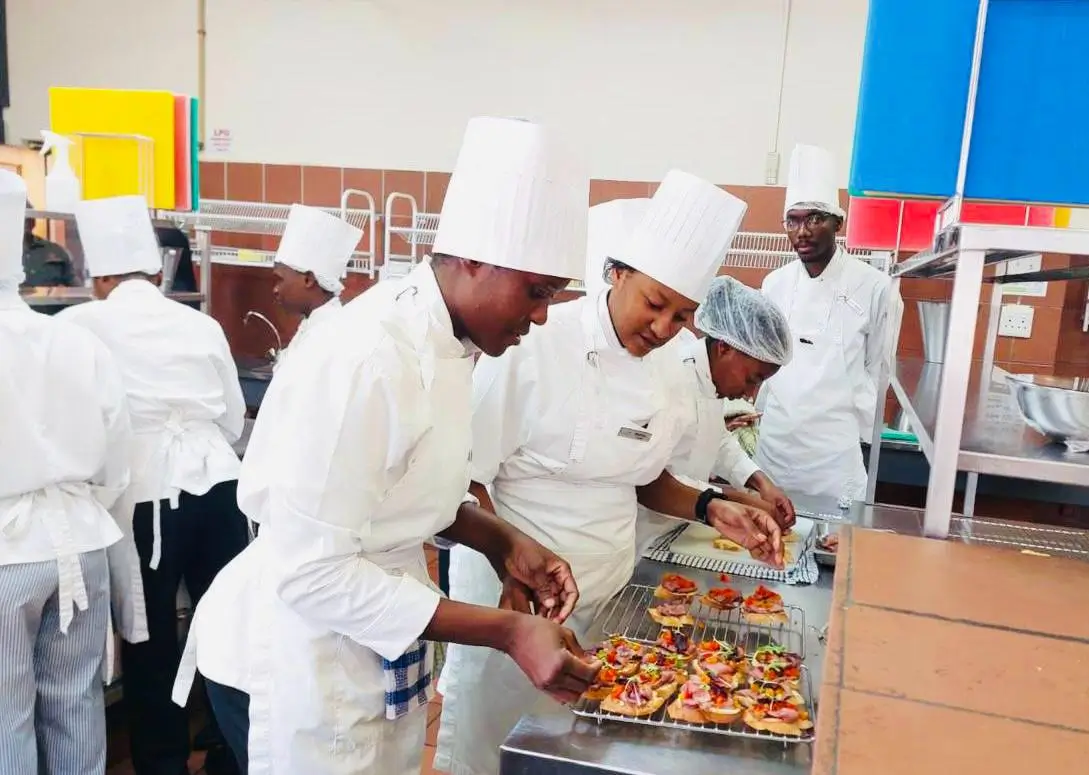
Six months after 23 young people from Massingir and Magude left for South Africa, Karingani reports strong progress in their hospitality and conservation training at SACT. The programme is funded by Karingani Game Reserve, lasts two years and costs about USD 2 million.
How the training works
- Students share accommodation with peers of other nationalities to practise English and learn from other cultures.
- Trainers use videos and graphic presentations, which have proved effective.
- Theory is taught in smaller sessions so translators can convey complex material accurately.
- Practical classes bring all students together, so Mozambican students get the same hands-on experience.
In the students’ words
I’m grateful to be at SACT to learn, gain skills and experience that will help me move forward. I believe I will have great job opportunities in the Hospitality Industry.
Cristência Mongoé, Mbacana community, Mapulanguene
I didn’t really know anything about animals, tracks and signs, birds and trees. Now I know about different animal tracks. I’ve also learnt how to follow animals and humans via tracks.
Ervaldo Henrique, Década da Victória, Massingir, Tracker Academy
Why it matters
The partnership combines conservation, economic growth, social inclusion and environmental protection, and equips young people to work in high-level hospitality across the region.
Frequently asked questions
Who funds the training?
Karingani Game Reserve funds the programme, which lasts two years and costs about USD 2 million.
How many students are taking part?
Twenty-three young people from Massingir and Magude, training in hospitality and conservation tracking.
How are language barriers handled?
Theory is taught in smaller sessions with translators, and students live with peers of other nationalities to practise English.
Sources
About SACT
The SA College for Tourism (SACT) was founded in 2001 by Dr Anton Rupert to build hospitality skills among young people from marginalised communities in South Africa and other SADC countries. In 2010 it added tracker training, to preserve the indigenous Southern African art of tracking.
About Karingani Game Reserve
Karingani Game Reserve is a private reserve in southern Mozambique. It borders Limpopo National Park and South Africa’s Kruger National Park, and combines conservation, tourism and community development. “Karingani” means “storytelling” in Changana, after a tradition of the local people.